



As the last school year becomes a distant memory, most families are still on holidays, or thinking about “back to school”. But increasingly, parents are also asking a bigger question:
Is my child in the right school for the world they’re going to graduate into – not just the one we grew up in?
The world is changing fast. Artificial intelligence, automation and technological disruption are reshaping careers. New industries are emerging, traditional professions are evolving, and university entry is more competitive than ever. Global employers surveyed in the World Economic Forum’s Future of Jobs 2025 report point to technology literacy, AI and big data, creative thinking, resilience and curiosity as among the skills rising fastest in importance between now and 2030.
At the same time, the OECD’s Future of Education and Skills 2030 work highlights that students will need broad competencies – critical and creative thinking, self-regulation, collaboration and social-emotional skills – to thrive in complex, unpredictable environments.
In this context, it is no longer enough for schools to be “good” or “solid”. They need to be nimble, globally minded and connected to the business world so students graduate with the skills, mindset and experience to thrive.
The start of a new year is the perfect time to pause and assess whether your child’s current school is doing that.
Three Questions Every Parent Should Ask in January
When you look at your child’s progress and reflecting on the last academic year, ask yourself:
- Is my child being stretched, or just ticking the boxes?
Are they challenged in their classes, or are they coasting? High marks can sometimes hide a lack of genuine challenge. - Is my child engaged in their learning?
Do they talk about what they are doing at school with curiosity and excitement? Or are they bored, disengaged or going through the motions? - Is this school genuinely preparing them for the future – not just the final exam?
Does their learning foster critical thinking, collaboration, research skills and global awareness? Are there real connections to universities, industry and the wider world?
If you are unsure about any of these, it may be time to explore whether a more advanced, future-focused environment could be a better fit.
When “Good Enough” Isn’t Good Enough Anymore
Many students in mainstream or large schools appear to be doing well on paper: their grades are fine, they behave, and teachers report that they are “tracking as expected”.
But for capable, curious, or gifted students, “as expected” is often not enough.
Under-challenged students can become bored, disengaged or complacent. They are rarely encouraged to push beyond the curriculum, to question, to investigate, or to connect their learning to real-world problems. Over time, that can limit their confidence, resilience and ambition.
A future-ready school will:
- Expect more of its students – in depth of thinking, not just volume of homework
- Surround them with like-minded peers who are also motivated and academically focused
- Provide pathways that open doors to top universities in Australia and overseas
- Treat them less like children in a generalist high school, and more like emerging adults in a pre-university environment
If your child is capable of more, staying in a school that is simply “fine” may not serve their long-term goals.
The World Is Changing Fast – Schools Must Be Nimble and Business-Connected
In the past, schools could afford to move slowly. Curricula remained stable for years, careers were predictable, and academic success was mostly about memorising and reproducing information.
Today, that is no longer the case.
- AI and automation are transforming knowledge-based work.
- STEM and technology are embedded across almost every industry.
- Globalisation means students are competing and collaborating with peers around the world.
- Universities and employers are looking for problem-solvers, innovators and communicators – not just high marks.
In this environment, schools need to be:
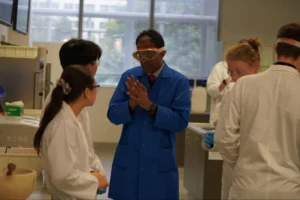
- Nimble: able to adapt programs, embrace new technologies and integrate current issues into the classroom.
- Business-connected: actively building partnerships with universities, companies and industry experts so students see how their learning plays out beyond the classroom.
- Focused: designing a coherent senior program that aligns with the skills and experiences students will need at university and in the workforce.
If your child’s current school still feels like the one you attended 20 or 30 years ago, it may not be keeping pace with the world they are walking into.
Why the IB Helps Students Become Future-Ready
The International Baccalaureate (IB) has been designed from the ground up to prepare students for a complex, rapidly changing world.
Rather than focusing solely on content, the IB emphasises:
- Critical thinking and analysis
- Independent research and extended writing
- Collaboration and communication
- Global perspectives and intercultural understanding
- Real-world application of knowledge
These align closely with the competencies international bodies like the OECD and the World Economic Forum identify as essential for 2030 and beyond.
Universities report that IB graduates arrive with strong research, writing and time-management skills, and survey data from the IB indicates that a large majority of university respondents regard the IB as ranking above most other education systems in preparing students for tertiary study.
An IB-only senior college goes further by building an entire school culture, timetable and support system around this one purpose, rather than trying to run multiple pathways at once.
Evidence on IB Students’ University Outcomes
Independent Australian research reinforces the value of this approach.
A 2024 national study by the Australian Council for Educational Research (ACER), using population-level university data across six cohorts of school leavers, compared outcomes for IB Diploma (IBDP) students with those of non-IB students. The study found that IBDP students were more likely to:
- Receive offers of university admission
- Persist into their second year of study
- Complete their degrees within the observed timeframe
In other words, the advantages of a rigorous, skills-rich program like the IB extend beyond getting into university – they carry through to staying there and succeeding.
Global Pathways, Not Just Local Options
For many families, the question is not only whether their child will attend university, but where – in Australia or abroad.
Each year, the IB sends student transcripts to more than 4,500 universities in over 110 countries and territories, including some of the world’s most selective institutions.
This global recognition gives IB graduates genuine flexibility: they can aim for leading Australian universities, or pursue degrees overseas with a credential that admissions offices know and trust.
What to Look For in a Future-Focused Senior School
If you are considering a change for 2026 or beyond, here are some things to look for when you visit schools:
1. Academic Focus and Track Record
- Is the senior program clearly defined and rigorous?
- Is there strong expertise in STEM and business subjects?
- Do they have a track record of graduates going to competitive universities in Australia and overseas?
2. Scale and Environment
- Are class sizes small enough for your child to be known and supported?
- Is it a senior-only environment where Years 9–12 are the priority, not an afterthought?
3. Real-World and Business Connections
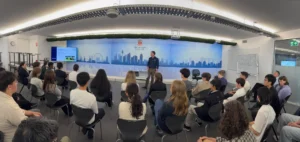
- Do students work with industry partners, guest speakers and real-world case studies?
- Are there excursions, projects or labs that connect learning to science, technology, engineering, entrepreneurship or finance?
- Are students exposed to professionals, entrepreneurs and researchers who can broaden their horizons?
4. Support for Students Changing Schools
- Do they offer structured orientation and academic counselling for students who join in Years 9, 10 or 11?
- How do teachers support students transitioning from another system (for example, from HSC to IB)?
A school that takes these elements seriously is more likely to set your child up not only for strong results, but for genuine future readiness.
Inside Westbourne College Sydney
At Westbourne College Sydney, our singular focus is preparing senior students for top universities and the careers of the future.
We are:
- IB-only: Every element of our program is aligned with the International Baccalaureate, known worldwide for its academic rigour and emphasis on critical thinking.
- STEM and business focused: We attract and support students who are interested in science, technology, engineering, mathematics and business, and we design learning experiences that go well beyond the textbook.
- Small and selective: Our cohorts are deliberately small so teachers know every student and can stretch them appropriately.
- Business and industry connected: Through partnerships, guest speakers, field trips and real-world projects, students gain insight into how what they learn in the classroom connects directly to industry and innovation.
For families considering a change, Westbourne offers a different kind of senior school: one that combines academic excellence with real-world relevance in a professional, pre-university environment.
Planning a Change
If you are wondering whether your child is in the right place for the years that matter most, now is the ideal time to explore options.
A simple plan:
- Review the year together. Talk honestly with your child about their engagement, challenge and aspirations.
- Shortlist schools that align with their interests and ambitions. Look for IB, STEM and business-focused environments that feel future-oriented, not traditional.
- Book campus tours and 1:1 conversations early in the new year. Places at selective senior schools can fill quickly.
- Come with questions. Ask specifically about academic expectations, business and university connections, and support for students who switch in Years 9–11.
Take the First Step
Changing schools is a significant decision, but staying in an environment that does not fully prepare your child for a rapidly changing world can be a bigger risk.
If you would like to explore whether Westbourne College Sydney could be the right fit for your child:
- Information evening
- Book a campus tour, or
- Arrange a 1:1 consultation to discuss your child’s interests, current school experience and future goals.
The world will not slow down. Choosing a nimble, business-connected, IB-only, international senior school now can make a profound difference to the opportunities open to your child in the years ahead.
Research & sources
For parents or students who would like to explore the underlying research further, key sources include:
- World Economic Forum – Future of Jobs Report 2025
Employer survey highlighting technology literacy, AI and big data, creative thinking, resilience and curiosity among the fastest-growing skills for the coming decade. - OECD – The Future of Education and Skills 2030
Frameworks outlining the knowledge, skills, attitudes and values – including critical and creative thinking, self-regulation and collaboration – that students will need to shape their own futures. - ACER (2024) – Australian university outcomes: A national study comparing IBDP and non-IBDP students
National study using Australian university admissions and completion data showing IBDP students are more likely to receive offers, persist into second year and complete their degrees than non-IB peers. - International Baccalaureate – university admission and recognition data
IB materials summarising that transcripts are sent to more than 4,500 universities in over 110 countries each year, and that universities regard IB students as well prepared for tertiary study.